

Plush vs Crinkle Dog Toys: Which Fits Your Dog?
Choosing between plush and crinkle dog toys is less about finding one universally better material and more about matching the toy to the way an individual dog plays. Some dogs prefer a soft object they can carry or rest beside. Others are drawn to sound, texture, shaking, or short games of fetch.
Both formats still require supervision, routine inspection, and replacement when damaged. Neither should be described as indestructible, and neither is appropriate for every dog. Use this comparison to evaluate play style, size, sound, construction, and the setting where the toy will be used.
The short answer
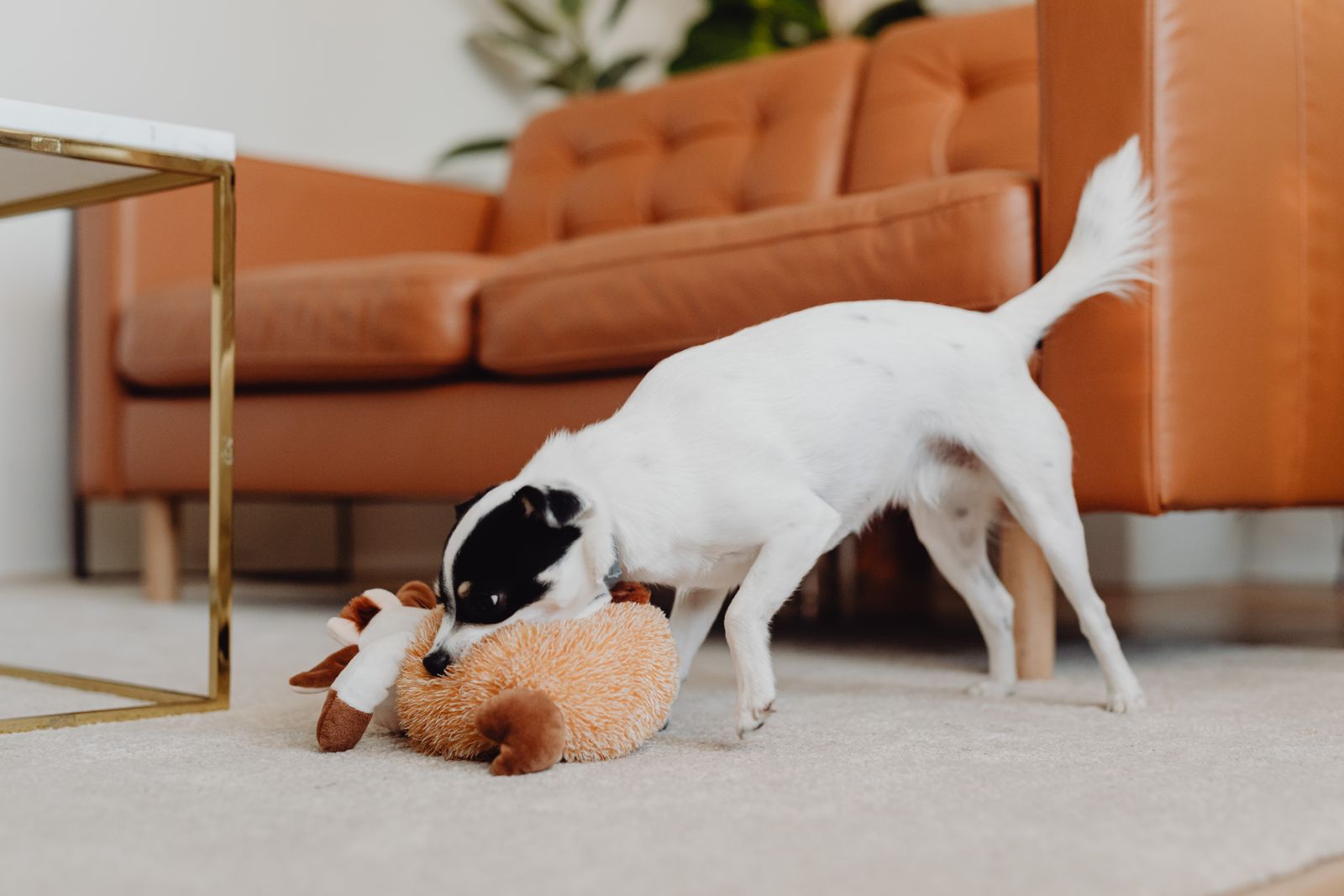
A traditional plush toy may suit a dog that enjoys carrying, gentle fetch, light interactive play, or resting with a soft object. A crinkle toy adds sound and tactile feedback, which may suit a dog that likes grabbing, shaking, or investigating different textures. A squeaker adds another sound cue, but it can also increase excitement for some dogs.
The best choice is the one the dog can use appropriately under supervision. A dog that immediately tears seams, swallows filling, or fixates on removing a squeaker needs a different construction or play format, not simply a larger version of the same toy.
Plush dog toys: soft texture and flexible play
Plush toys usually combine a soft outer fabric with filling. Their shape and softness can make them easy to carry, toss, retrieve, or keep nearby during rest. Some include embroidered details rather than attached plastic features, but seams, fabric, and filling still need inspection.
When plush may be a useful match
- The dog carries toys from room to room without rapidly dismantling them.
- Play centers on gentle fetch, short retrieves, or light tugging with a person.
- The dog likes soft texture and settles near toys after active play.
- The household prefers a quieter toy format without crinkle material or a squeaker.
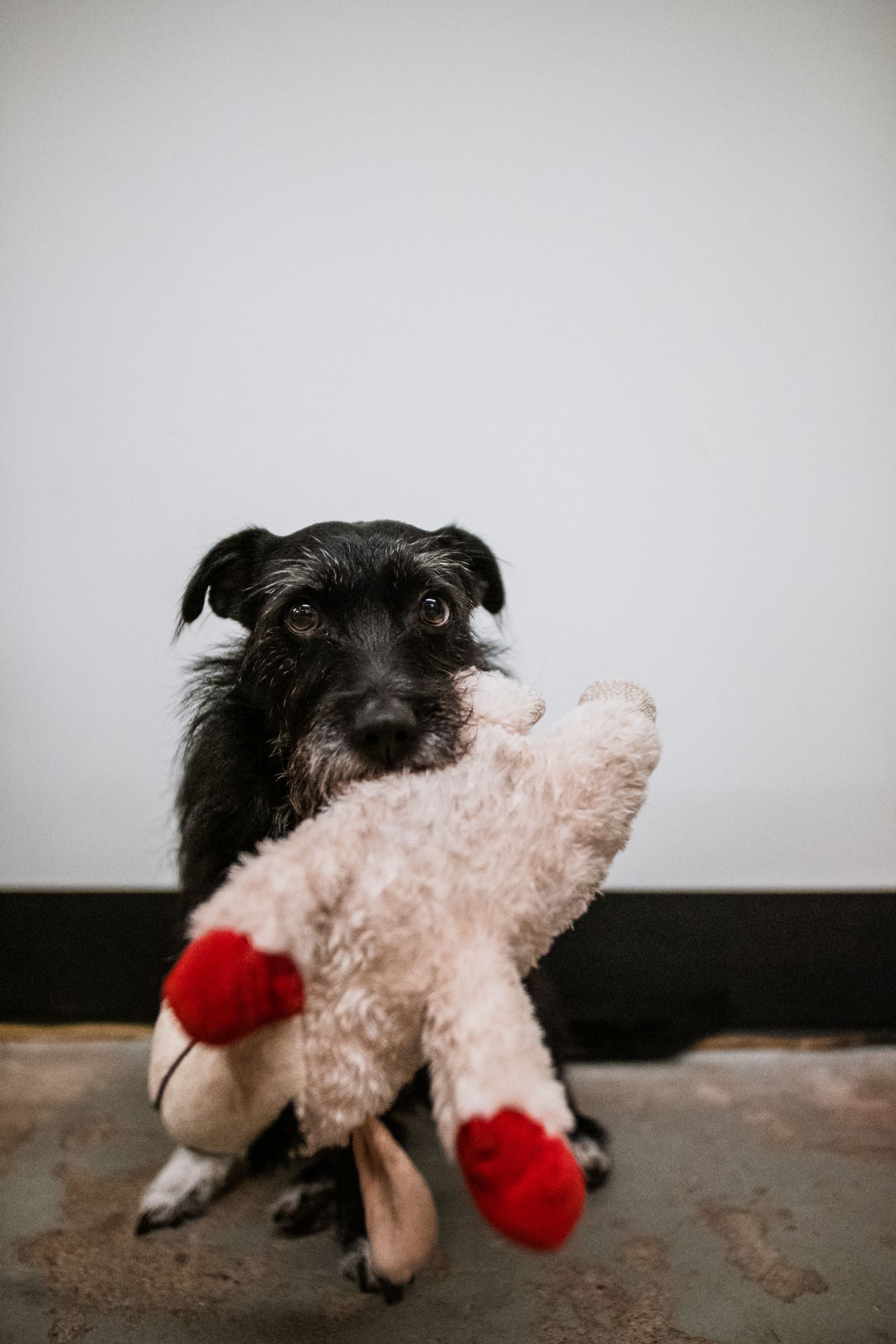
A soft toy is not automatically a safe chew toy. Observe whether the dog mouths the surface gently or concentrates force on one seam, limb, or decorative area. Remove the toy if fabric opens, filling becomes exposed, or any piece loosens.
Crinkle and squeaky toys: more sensory feedback
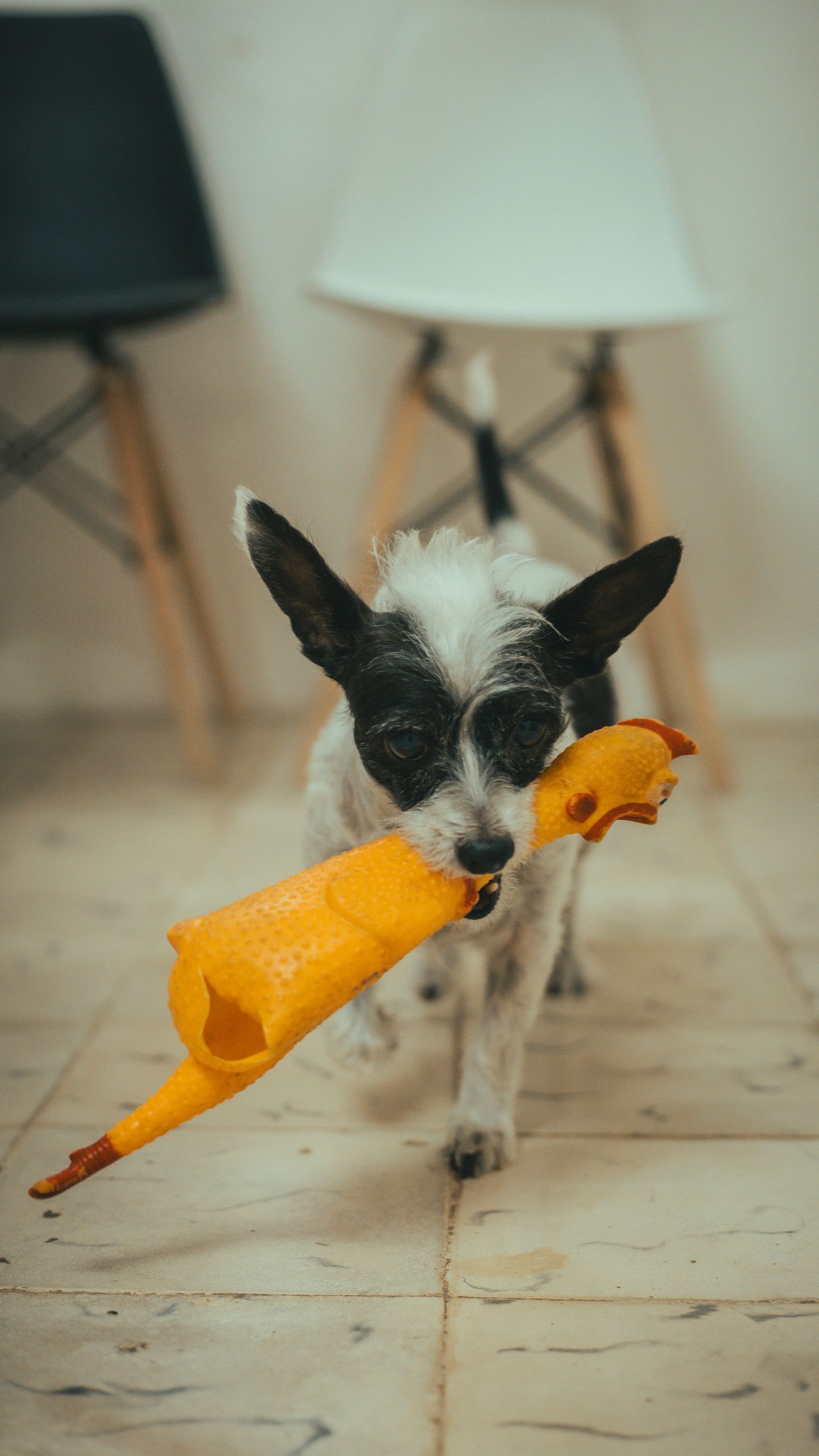
Crinkle material makes a rustling sound when the toy is compressed, carried, or shaken. A built-in squeaker produces a separate sound when pressure reaches it. These features can make the toy easier for some dogs to notice and may support brief interactive games.
When crinkle may be a useful match
- The dog responds to sound and texture during supervised play.
- The dog enjoys carrying or shaking longer, easy-to-grip shapes.
- You want a toy that can vary a fetch or light tug routine.
- The dog can interact without immediately trying to remove internal components.
Sound is not a guarantee that a dog will stay interested, and more stimulation is not always better. If the dog becomes frantic, guards the toy, repeatedly targets the squeaker, or cannot disengage, pause the session and choose a calmer activity.
Compare the formats by play style
For carrying
Look for a shape the dog can hold without straining and without swallowing or fitting the entire toy far into the mouth. Soft plush and textured mesh can both work, but the dog's grip and the toy's dimensions matter more than the category name.
For fetch
Choose a toy that is easy to see, pick up, and retrieve in the planned space. Use short, controlled throws indoors and keep the area free of stairs, slippery flooring, and breakable objects. A lightweight plush or crinkle toy is not a substitute for an outdoor retrieval toy when the environment calls for something else.
For light tug
Use only gentle, human-guided tugging when the product instructions support it. Keep movement low and controlled, avoid twisting the neck, and stop if the dog redirects teeth toward hands or if seams are under visible strain. Plush and mesh construction can both fail when used beyond their intended limits.
For chewing
If the dog's main goal is prolonged, forceful chewing, a stuffed or internally layered sound toy may not be the right format. Do not rely on marketing labels alone. Observe the actual behavior and choose equipment designed for that use with guidance from a veterinarian or qualified pet professional when needed.
For quiet companionship
A soft plush toy without sound features may be easier to keep in a quieter routine. Even then, do not leave it available unsupervised until you understand how the dog handles it, and continue regular checks throughout the toy's life.
Size and construction matter as much as texture
Before offering any toy, compare its size with the dog's mouth and play pattern. The toy should not be easy to swallow, wedge at the back of the mouth, or break into accessible pieces. A larger dog is not automatically a rough player, and a small dog is not automatically gentle; behavior is more informative than breed or body size alone.
Inspect:
- outer fabric for punctures, thinning, and fraying;
- seams for separation or exposed thread;
- embroidered or decorative areas for loosening;
- filling, crinkle layers, and squeakers for exposure;
- the overall shape for missing material; and
- odor, residue, or dampness before storage.
Check before and after every session. Discard a damaged toy rather than repairing it in a way that introduces thread, glue, tape, staples, or another hazard.
A simple two-session comparison
- Prepare the room. Clear hazards and keep other pets separate if they may compete.
- Inspect both toys. Confirm size, seams, fabric, and internal components are intact.
- Offer one format. Use a short supervised session and note carrying, fetching, tugging, chewing, and ability to stop.
- Put it away. Inspect it again and allow a calm break.
- Try the other format later. Use a similar setting so the comparison is meaningful.
- Choose from behavior. Favor the toy the dog uses appropriately, not simply the one that creates the most excitement.
Repeated observation is more reliable than one dramatic reaction. Interest may also change with location, time of day, or whether a person is participating.
Two current formats to compare
The Harmony Pets Plush Duck Dog Toy currently uses plush fabric, embroidered facial details, reinforced stitching, and PP cotton filling. Its product page lists small and medium size options and describes fetch, carrying, cuddling, and light interactive play.
The Harmony Pets Mesh Squeaky Duck Dog Toy with Crinkle Paper currently combines textured mesh fabric, a built-in squeaker, and full-body crinkle material in a longer duck shape. Its page describes fetch, carrying, shaking, and light tugging.
Review the current page and instructions before use. Product availability, variants, and details can change. Neither format should be treated as indestructible, and damaged toys should be removed promptly.
Frequently asked questions
Are crinkle toys safe for dogs?
Safety depends on the individual dog, construction, condition, size, and supervision. Remove the toy if the dog exposes or tries to swallow crinkle material, fabric, thread, or another internal component.
Are plush toys only for gentle dogs?
Plush toys are often a better fit for gentler handling, but labels cannot predict behavior. Watch how the dog uses the toy and stop if tearing or component removal begins.
Can a dog sleep with a plush toy?
Do not assume a toy is safe to leave unattended. Follow the product instructions and base access on the dog's demonstrated behavior and the toy's condition.
How often should dog toys be replaced?
There is no fixed schedule. Replace a toy as soon as it is torn, frayed, punctured, missing material, exposing filling or sound components, or otherwise no longer intact.
What if my dog ignores both types?
Try a different supervised activity rather than forcing interest. Dogs vary in their preferences, and a veterinarian can help when a sudden loss of interest in normal activity appears with other changes.
The useful comparison is not simply plush versus crinkle. It is the dog's real play pattern matched with an appropriately sized, intact toy and attentive supervision.